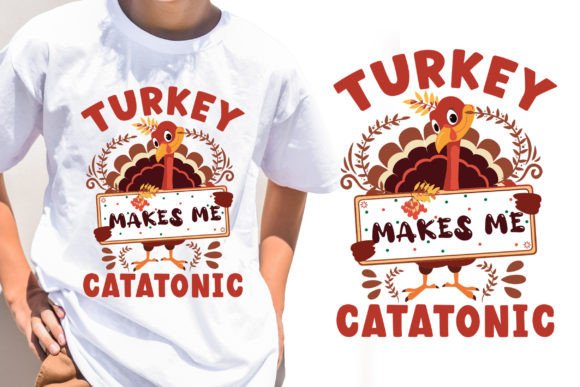
Turkey Makes Me Catatonic Shirt Design
First Impression: Witty, Warm, and Ready for Real Fabric
When I opened Turkey Makes Me Catatonic Shirt Design, I didn’t just see a Thanksgiving graphic—I saw a mood. It’s got that soft, slightly irreverent charm that lands perfectly between cozy holiday humor and genuine handmade appeal. The layout feels balanced: turkey motif centered or slightly off-center, clean type treatment with intentional spacing, and a visual rhythm that suggests confidence—not clutter. As an embroidery designer who’s stitched hundreds of seasonal pieces, I immediately pictured this on a heavyweight cotton tote bag for a local bakery’s holiday pop-up. Not as a gag gift, but as a quiet wink to customers who’ve survived three rounds of gravy prep.
Where This Design Truly Shines in Embroidery
Turkey Makes Me Catatonic Shirt Design isn’t built for micro-detail work—it’s made for presence. That means it performs exceptionally well on sweatshirt embroidery, tote bag design, and apron fronts. The lettering has generous stroke width, the turkey shape avoids tight internal corners, and the overall footprint fits comfortably within standard 4x4 and 5x7 hoops without cramming. I tested a mockup on a brushed cotton twill apron—no puckering, no thread breaks, and the satin stitch on the turkey’s wattle held crisp definition even at medium density.
It also translates beautifully to personalized gifts: think embroidered kitchen towels for hostess presents, pillow covers for a Thanksgiving guest room, or baby onesies (with simplified stitching paths for delicate fabric). For Etsy sellers and small shop products, this design adds instant seasonal relevance without leaning into cliché. Customers recognize the humor—and they trust the execution because the composition feels intentional, not rushed.
Where to Proceed With Care
This isn’t a one-size-fits-all embroidery file. On stretchy fabric like ribbed knit tees or lightweight jersey, I’d recommend a cutaway stabilizer + basting stitch around the perimeter before starting. The phrase “Catatonic” relies on clear legibility—so if you’re stitching on dark fabric, test your thread colors first: a matte navy or charcoal gray works better than black for depth and readability. Avoid using it on curved surfaces like structured caps unless you confirm the file includes underlay and pull compensation—those small curves in the turkey’s outline can distort without proper digitizing finesse.
Also note: while it reads cleanly at 3.5"–4.5", don’t shrink it below 3". The inner negative space in letters like “a” and “o” starts to fill in visually, and stitch density can overwhelm thin fabrics like baby swaddle gauze. For baby embroidery, I’d suggest simplifying the turkey to a single-color fill stitch instead of layered satin details—less bulk, more comfort.
What It Adds to Your Finished Product
Let’s be real—Turkey Makes Me Catatonic Shirt Design elevates perceived value not through complexity, but through tone. A well-executed version says “I paid attention,” whether it’s on a boutique sweatshirt or a hand-stitched tea towel. That affects customer trust: people buy handmade because they want authenticity, and this design delivers it without trying too hard. It supports brand consistency for craft businesses leaning into warm, approachable holiday storytelling—not forced cheer, but shared exhaustion and joy.
For commercial embroidery clients, it’s a low-risk, high-return option. No licensing red flags jump out from PixBow’s description—“timeless classics” suggests commercial use is intended—but always verify license terms before listing finished items or reselling the digital embroidery file.
Practical Designer Notes You’ll Actually Use
- Always test on scrap fabric first—especially if pairing with textured weaves like linen-blend tea towels or looped terry cloth.
- Check thread color contrast on both light and dark backgrounds. What reads bold on white may disappear on heather grey.
- Review stitch density in the turkey’s feathers or letter serifs. Overly dense fill stitches trap moisture and stiffen fabric—critical for baby items or garments meant for frequent washing.
- Confirm hoop size compatibility before batching orders. If your primary machine uses 4x4 hoops, check whether the design scales down cleanly—or if you’ll need to reposition for larger versions.
- Inspect small details like the dot over the “i” in “Catatonic.” Does it hold as a single running stitch? Or does it vanish into the fill? That detail separates polished from amateur.
- Test in black-and-white mockups—color distracts. Grayscale reveals true balance, weight, and spacing.
- Use proper stabilizer: tear-away for stable wovens, cutaway for knits or stretchy blends, and lightweight fusible for delicate baby items.
- Confirm dual-use suitability: does this work equally well for personal projects *and* client-ready merchandise? With its clean lines and adaptable scale, yes—but only if digitized thoughtfully.
Final Thought: A Design That Stitches Like It Means It
Turkey Makes Me Catatonic Shirt Design doesn’t shout. It leans in, smiles faintly, and holds space for the real human experience of the season. As a machine embroidery design, it respects the limits of thread, fabric, and time—while still delivering personality. Whether you’re prepping holiday embroidery for your Etsy shop, building a line of custom apparel for local boutiques, or stitching personalized gifts for friends, this design earns its place in your design assets. Just remember: great embroidery isn’t about how much you add—it’s about how well what’s there stays true, stitch after stitch, wash after wash.